Case study
Subscription Tracker
End-to-end subscription platform: Express/TypeScript API, offline-first Android client, Redis reliability patterns, and Gemini receipt extraction.
2025 · Full-stack engineer — API, Android client & reliability
- TypeScript
- Node.js
- PostgreSQL
- Redis
- BullMQ
- Gemini API
Problem
People lose track of recurring charges across apps and currencies. Parsing subscription details from screenshots or pasted text is messy, sync must work offline, and create/update endpoints need to stay correct under concurrent duplicate requests.
Approach
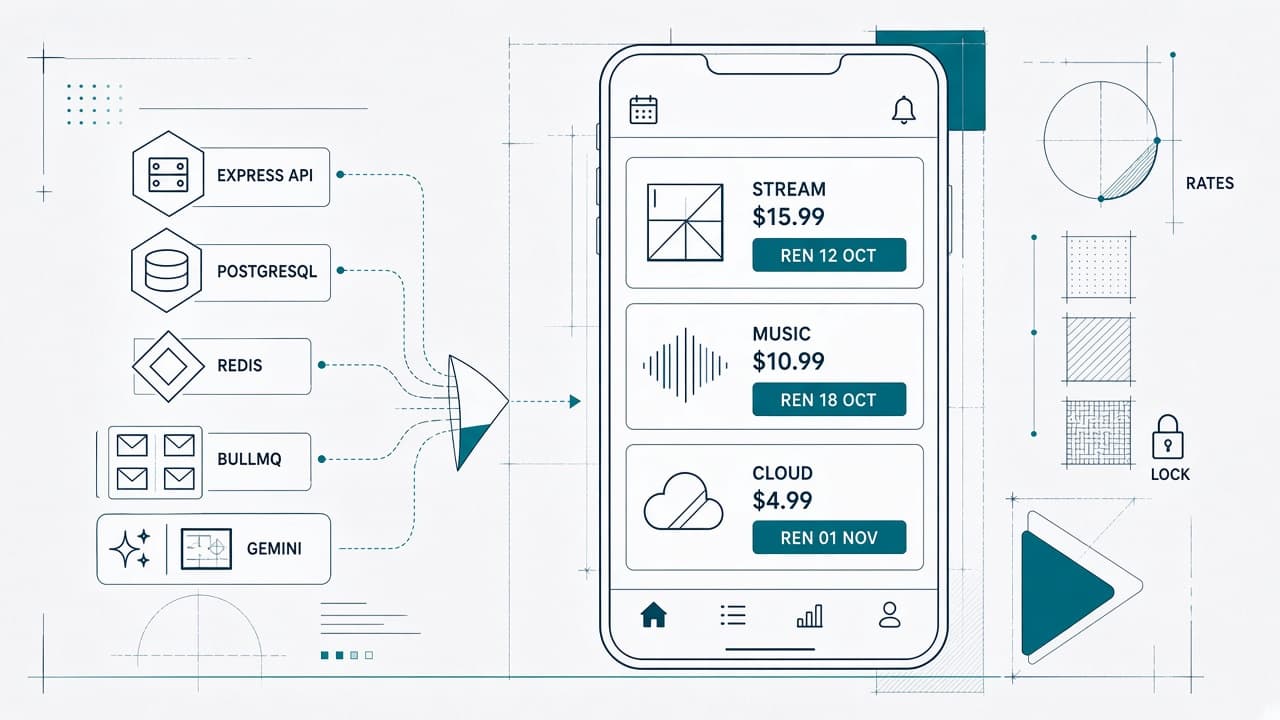
Built an Express/TypeScript API on PostgreSQL (Supabase) with an offline-first Android client that syncs on reconnect. Used Redis for caching, idempotency, rate limiting, and BullMQ jobs. Replaced a planned SMS-parsing pipeline with Gemini-based image/text extraction — name, price, and currency with confidence scoring and manual-entry fallback.
Architecture
- PostgreSQL + Express/TypeScript API with JWT auth and Zod-validated request bodies
- Idempotency keys and transaction-based concurrency protection on subscription create/update
- BullMQ jobs for trial/renewal reminders, currency-rate refresh, and expired-session cleanup with retry and exponential backoff
- Redis-cached currency rates with TTL and cached-fallback when upstream APIs fail
- Gemini extraction service for screenshots/pasted text, with regex fallback for low-confidence reads
- Jest/Supertest coverage across auth, CRUD, concurrency 409s, Redis idempotency, extraction, and job dedupe — 55 tests
Outcomes
- Verified under concurrent load with a custom script simulating 50 simultaneous duplicate requests — duplicate subscriptions eliminated
- Background reminders and rate refresh keep running with retry/backoff on failure
- Currency conversions stay available during upstream outages via cached fallback
- Open source backend and Expo Android app on GitHub